Current Averge Gasoline Price |
Current Averge Propane Price |
$1.10
per litre |
$0.46
per litre |
*pricing as of Feb. 2020 |
|
On this page:
- Where to convert your car
- Where to fill up with propane
- Supplier list
With today's gas prices surpassing $1 dollar mark people are becoming
more interested in other fuel alternatives. Hybrid and electric vehicles are
more popular as well, but what other alternatives do we have?
It has been proven for years that our cars will run perfectly on fuels such as liquid propane (also known as LP) and natural gas. This technology has been around since mid 60's and is currently being used by approximately 350,000 vehicles in North America. Most popular vehicles include forklifts, taxi cabs, public buses and some trucks. Now this kind of technology is getting more attention from everyday car owners.
Note about Natural gas conversions. In Canada and USA this idea is pretty much dead. With almost NO STATIONS to refill your vehicle with Natural Gas it makes no sense to even discuss this issue.
Propane conversion technology on the other hand is very much alive and well in both Canada and USA.
Advantages to converting your car to liquid propane
(LP) are:
- cost, average price for propane is at around 50% less
than regular gasoline
- safer for the environment
- propane is much easier on your engine, no build up, your spark plugs will breathe
easier too
- your engine performance and mileage per litre are about the same
- you can simply switch between running your car on regular gasoline
or propane
- equipment can be uninstalled for use in your next vehicle.
Disadvantages to converting your car to liquid propane
(LP) are:
- costs involved in switching (parts, labor, etc.)
- Fewer stations are equipped with propane filling station (you have
to get accustomed to which stations have it - and there are lots
of them - this is not a big deal) Be sure
to visit our pages on propane
filling gas stations.
So, how do you convert your car to run on propane or natural gas? There are lots of places where you can take your car and have it converted to LP. See listing here.
Some of the parts you will have to purchase for the conversion are the fuel tank (to hold liquid propane or natural gas, usually stored in your trunk or underneath the car if you decided to completely get rid of your gas tank), converter (reducer) which converts the liquid to gas, propane injectors and the rest is hardware (see full listing of parts required).
The installment of the above mentioned equipment is not something we would recommend for you to try at home. But should you want to give it a try see here for listing of suppliers, manufacturers and distributors..
For more information and resources please visit following:
Canada:
Propane
Gas Association of Canada
Ontario
Propane Association
USA:
National
Propane Gas Association

*If you have already converted your vehicle to liquid propane or natural
gas send us your comments or photos and we'll
post them on our site.
| Comments: | ||
| Don (3/8/2012 11:14:29 AM) | ||
 |
looking for someone that converts cars trucks to natual gas in N. IL. area or email lund11@yahoo.com thankyou | |
| Elias (3/18/2012 7:35:24 AM) | ||
|
I currently live in Greece where fuel prices are ridiculously high. Liter of fuel here is currently 1.79 Euros which is probably over $2 dollars Canadian if you factor in the conversion rate. I have found this forum because I am interested in moving to Canada. Here in Europe many automobiles are converted to what we call LPG (Liquid Petroleum Gas). Any vehicle may be converted, aluminum cylinder head or not. The most important part is the tuning of the whole system. Generation 4 and generation 5 systems work with the stock ECM or engine control module. For those of you that are worried about the valves, there is a product called Flash Lube. I believe it is Australian but is widely used here in Europe. There are other valve care systems that may be used. Proper tuning and the use of flash lube or other additives to protect valves will guarantee years of use. In Europe everything from Mercedes to simple fleet vehicles are converted. The only thing to be cautious about is if the engine utilizes direct fuel injection. If this is the case the system that is to be used should be directly manufactured for you vehicle and more specifically your engine code. | |
| THOM (3/21/2012 11:48:29 PM) | ||
|
I have a 2006 GMC 4.8 V8 truck. any one no where to go around the Gulf Port Mississippi area to have it changed over to propane. | |
| edward (3/26/2012 10:58:02 PM) | ||
|
I have a Navigator. What will it cost to put a propane kit on the car? | |
| Dino (4/4/2012 9:22:04 AM) | ||
|
Al I have an Avalache, where did you get yours converted. | |
| James (4/4/2012 3:13:11 PM) | ||
|
Do you have the parts for a 1988 Dodge Ram 5.7 with a 4bbl Carb? dirtroadfun@gmail.com | |
| Ron (4/4/2012 4:12:19 PM) | ||
|
Dino & James, read above posts, some users have posted costs & where to get your car converted, in GTA area you can try all auto propane dot com. | |
| Richard (4/4/2012 10:07:51 PM) | ||
|
Hi Terry, If you are in the Kitchener Ontario area, then the Downtown Auto Centre, Across from the Kitchener Bus Depot will do Propane and CNG Conversions. They Converted my 2009 Kia Sedona to Propane. | |
| Ron (4/4/2012 10:14:00 PM) | ||
|
Richard, thank you for the info, I hope it helps others. | |
| Ethan (4/16/2012 4:40:15 PM) | ||
|
Hi, I am driving a Jeep Commanche on loan from a friend who is laid up after a stroke so I can't ask him, it is propane powered and sounds like it has a leak after driving it for awhile, is this just the pressure dying down or an actual leak? I guess do propane powered cars normally make that sound. | |
| fazal siddiqui (4/19/2012 12:09:14 AM) | ||
|
I am living in Mississauga i need information for CNG for my Cadillac Escalade cell no 4166162343 | |
| Kurt (4/21/2012 10:58:31 AM) | ||
|
I would like information on converting a 08 Camry hybrid to propane or compressed natural gas. Please respond to Dollykat100@aol.com Thanks. | |
| Dominic (4/25/2012 10:45:38 PM) | ||
|
gta and montreal if your looking to convert your trucks chek out our site and gve us a call budgetpropane.com | |
| Ron (5/5/2012 10:20:46 AM) | ||
|
I have had a propane ex ambulance for over 20 years. Forget propane. Auto propane in Canada has failed and most stations have closed. There is nobody to service the existing systems. Big oil loses money every time you fill with propane so no more propane! | |
| Ken (5/5/2012 3:22:41 PM) | ||
|
Ron, 20 years running same vehicle? Only shows how good propane for the engine is. | |
| Serge Roy (5/13/2012 4:54:27 PM) | ||
|
where can I have a kit installed in ALberta? | |
| Bart (5/14/2012 6:36:21 AM) | ||
|
http://www.elpigaz.com/index.dhtml?sid=2 contact me: Bartosz Kulis export3@elpigaz.com | |
| Ray (5/19/2012 8:26:01 AM) | ||
|
Need to find a propane conversion centre for my 2002 dodge ram in Windsor ontario | |
| Kevin (5/28/2012 2:25:53 PM) | ||
|
I have a 1985 motorhome on a chevy 350. It is duel fuel (gas and propane). Lots of comments above about lack of propane filling stations, that is not my experience I have no problem finding stations both in Vancouver and in the southern part of province where I do most of my traveling. MY PROBLEM; it runs very well on gas however for the three years that I�ve owned it sometimes when I flip from propane to gas, the engine will stall and it might be months before I can get it to run on gas again! It always starts on propane, that is never an issue. I feel like it�s something that is happening during the flipping process. | |
| Kevin (5/28/2012 4:28:35 PM) | ||
|
cont. from above: I have a neutral position on my toggle switch. I believe I�m supposed to leave it in the neutral position until the engine starts to sputter and stall, then I quickly flip to the other fuel. When it works, it works extremely well. I know it�s not the gasoline (bad, old, etc.), I know that the gas tank has air in it because I�ve had the cap off several times in the last week or two. Any thoughts or advice would be appreciated. | |
| optimuslpg sys (6/4/2012 10:59:05 AM) | ||
|
here in the UK i have been converting cars to LPG for 17years the best advice i can give you is use BRC for upto V8 and ROMANO for V10 set them correctly and you will never have an issue always use multipoint system's and if your vehicle is old eg carbs then impco system known as single point. dont bother with cheap systems I have tried too many over the years and the very best is BRC, ROMANO, OMVL, ZAVOLI the rest rubbish. I have many taxi's running on BRC systems and have covered over 350k miles with out an issue and still going strong. soft valve issue yes an issue with HONDA's, Mitsubishi and most fords in UK/europe to over | |
| Mike (6/16/2012 10:13:30 AM) | ||
|
I converted my car at all auto propane in Mississauga ( royal Windsor ) service was bad and after 2 years propane fuel injectors failed ( quote over 600 $ to replace ). Will do next car but not at the same place as they use cheap parts instead brand names. | |
| Domenic (7/14/2012 1:44:29 PM) | ||
|
TO MIke (6/16/2012) I had four of my p/u truck converted at all auto propane. The service was great and the technicians very knowledgeable. The propane system have been great, with no problems.As for the parts. All parts have been stamped for approval. | |
| mike (8/23/2012 12:17:09 AM) | ||
|
to Domenic,I know you Domenic,you are one of the guys working for mississauga guys.when I was in your shop there were 2 other guys ,1 taxi and one gent. from London ,both complaining that eversince you installed the system they NEVER got your promised only 5 % greater propane consumption. WE all got 30 % higher propane then gas consumption.YOU ADVERTISED yourselves in toronto papers that your system is using ONLY 5 % more propane then gas.and for parts being stamped for approval? you never allow anybody into the shop and as well never show parts nor original boxes so do not state something you are NOT showing to the clients. | |
| john (8/23/2012 1:48:36 PM) | ||
|
I had similar experience with mississauga allauto propane...slow ,incompetent service,expensive installation of cheap parts which dont last. coming back for adjusting propane consumption which never worked .over 25 % more propane versus gas consumption. what to say , you get what you pay | |
| Frank (8/24/2012 4:24:40 AM) | ||
|
I had the propane conversion installed in my F150 by the same people on Royal Windsor drive in Mississauga, about 18 months ago. I have shopped around and they had the best price, and best warranty at the time. They did a very good job. | |
| Julian (8/25/2012 8:30:56 AM) | ||
|
I have a 08 Dodge nitro - livIng in kw - id like info on this type Of conversion. Please email me. Jellul6667@gmail.com | |
| caner (9/6/2012 7:54:07 PM) | ||
|
i have 2007 chev exp 15 passenger i want to put propane gas tank to save a bit more money any1 knows where i can go install one or any place please write back to me at canerkirikci@yahoo.ca thanks toall | |
| CdnAuto (9/6/2012 8:58:37 PM) | ||
|
Caner, it would have helped if you mentioned where you live | |
| Marek (10/1/2012 9:32:35 PM) | ||
|
Hi can someone tell me why installation in Canada is so expensive because in Europe 6 cylinder car cost about 1500$. And system itself cost around 700$. My guess in Canada they cheating? | |
| frank (12/18/2012 12:01:08 PM) | ||
|
I noticed that mississauga guys are very defensive and claiming they have BEST warranty they NEVER mentioned what is their warranty period versus competition warranty period? If you are serious business you would back up your claim with facts right? | |
| bob (12/18/2012 12:07:03 PM) | ||
|
hey are not cheating in canada.just government is not letting people cut on gas emissions.they prefer polution .just 2 days ago news are published that emission tests did not provide less polution. see if people are charged 500-800 $ asin europe for propane conversion pollution would be cut in half immediately. NOT IN CANADA'S INTERESTS | |
| shepd (12/29/2012 2:38:28 AM) | ||
|
Propane conversion costs more in Canada (especially Ontario) because we have the strictest rules in the world for conversions. The propane tanks used here will withstand gunshots (check youtube) and toroidal (spare tire) tanks are generally illegal. | |
| jan (2/14/2013 8:13:39 AM) | ||
|
converted my impala, paid 4000, burning 6 litres of gas, burning 5 litres of propane, gas is at 1.30, propane at .50 cents, you do the math. | |
 Ontario Gas prices- Sept. 1 05
April 2006 -
Gas prices stay at around $1 dollar mark.
Average price of unleaded - $1.15*
Average price of propane - $0.45*
*Prices as of Apr. 2006
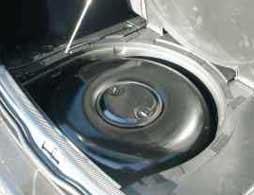
New propane tank design.
Shaped to fit in place of your spare tire.
MORE FROM CDNAUTO

Canada gas tax breakdown per province - Each litre of gas you're buying, how much of that amount is going to your government? View breakdown across all provinces.
High gas prices? Think again. - So you think you're paying too much for gas?. Take a look at pricing of gas around the world and see how Canada stacks up against other countries.

With gas prices surpassing $1 dollar mark we take a look at other fuel
alternatives. Hybrid vehicles, CNG, Propane and other alternatives.
Read our article on propane
and natural gas

Diesel engine technology has been around for quite some time now. See list of Diesel vehicles that are currently available to you.