Radiator Replacement
It's middle of the summer, you're sitting stuck in traffic, barely moving, engine running hot, watching the temperature gauge go up, your fan kicks in, it's running and running and running. Your engine temperature indicator reaches the red section on the gauge and you've got yourself a problem. Two things are usually to blame for this. Either your water pump belt broke or you've got a leaking radiator. In some cases radiators can be repaired but this article is about removal and replacing radiator.
Although some of you might think this is a hard job, really there is not that much to it. Before you begin, you must remove the keys from ignition as the radiator fan may start at any time (still not feeling safe? disconnect your battery). Radiator is usually bolted to the frame of the car at the top with two bolts on each side. There are no bolts at the bottom as it sits on rubber cushions in holes cut out in the frame.
We begin by removing two top bolts (see picture 1). Next we remove rubber hose (one on top right, and one on the bottom left), this is where things usually get messy and any radiator fluid that is still inside will leak out. I strongly recommend using a tray and catching the fluid before it hits the ground. Radiator fluid is poisonous and has to be properly disposed. If your car is equipped with air conditioning (AC) you will also notice that air conditioning has it's own separate radiator. Those two are usually housed together and you will have to remove them at same time. If this is the case I strongly recommend that you stop right now and have a professional replace your radiator. Removing air conditioning hoses will release gases inside your system and harm our environment, not to mention that your AC will not work after you finish.
If you have an electric fan, you have to unplug it as well as it will come out with your radiator. Carefully lift the entire unit being careful not to scratch both sides of your radiator, now we have our unit removed (See picture 2 both old and new radiator).
Mounting the unit back in is pretty much a reversal of the above steps. It is a good idea to mount the fan before you insert the radiator as you might have problems squeezing it in after.

(Picture 1) Removing radiator
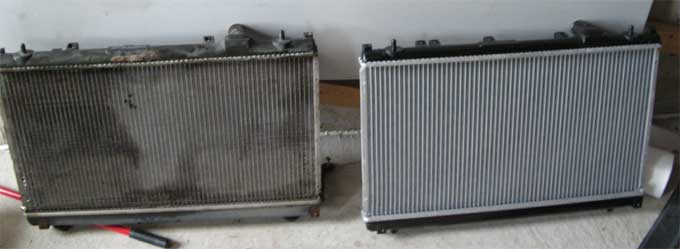
(Picture 2) Old and new radiator
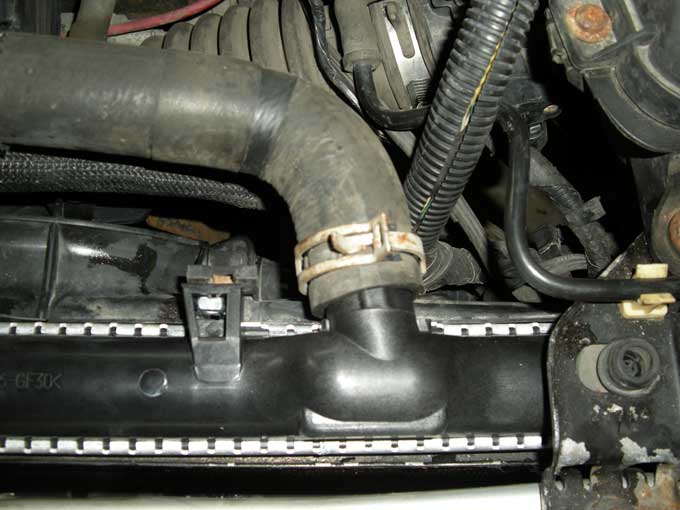
Radiator hose
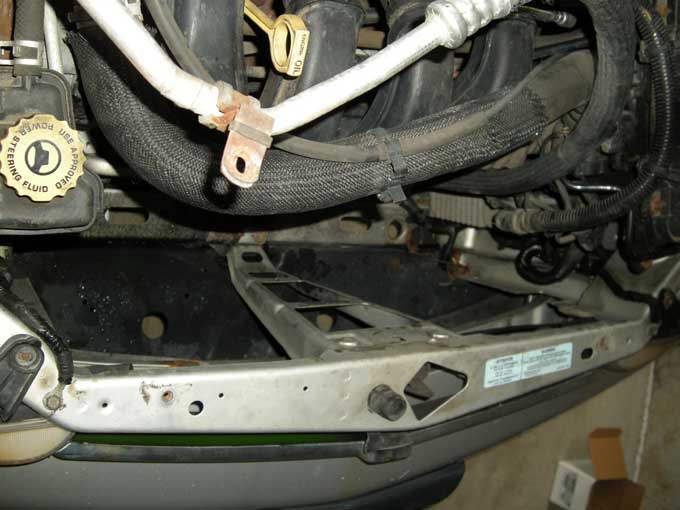
Unit removed
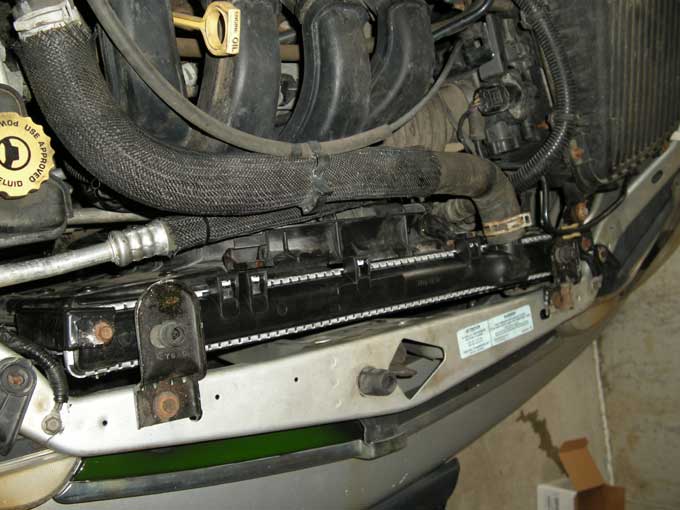
New unit installed
MORE FROM CDNAUTO

Canada gas tax breakdown per province - Each litre of gas you're buying, how much of that amount is going to your government? View breakdown across all provinces.
High gas prices? Think again. - So you think you're paying too much for gas?. Take a look at pricing of gas around the world and see how Canada stacks up against other countries.

With gas prices surpassing $1 dollar mark we take a look at other fuel
alternatives. Hybrid vehicles, CNG, Propane and other alternatives.
Read our article on propane
and natural gas

Diesel engine technology has been around for quite some time now. See list of Diesel vehicles that are currently available to you.